Kamil Kamiński | Recruitment Marketing & Analytics | CMO at Upshift
I helped recruit 100,000+ hourly workers while cutting cost per onboarded worker by over 95%.
I bring performance marketing to high-volume recruiting. I measure what actually produces qualified applicants and workers, not just clicks.
A walkthrough of the actual work I led at Upshift, including campaigns, candidate engagement and performance measurement.
Case study: Upshift, 2021–2026
How we recruited 100,000+ hourly workers at 95% lower acquisition cost
The point of view
I treat hiring like customer acquisition. Then I measure what works.
My background is in marketing and mathematics. That combination shapes how I approach recruiting.
Marketing makes the job attractive. Analytical thinking allows me to measure what works.
I treat a job like a product: sell the opportunity, make applying easy, and follow every dollar from the first click to the first day at work.

The mechanism
Five stages. Every dollar measured.
These are the five parts of recruitment acquisition I manage, from the job advertisement to a worker's first shift.
Buy applicants, not clicks
I spread the recruitment budget across job ad platforms such as Indeed, Appcast and other programmatic job boards, and across advertising placements such as Google, Meta (Facebook and Instagram) and YouTube. The budget follows the results. Every source is tracked up to the application, not just to clicks or likes, so I can see precisely which sources bring the most applications and which bring high-quality applicants.
More job visibility, lower applicant cost
On Indeed, I published more job ad variants with other position names. They took up more space in the search results and lowered the cost per acquisition on Indeed by 20%.
IndeedShift spend toward qualified applicants
I measured every ad platform up to the application, not just the click, and gave more budget to the platforms that produced qualified applicants at the lowest cost. The overall cost per candidate fell by 15%.
All ad platformsTest the message before scaling spend
I ran rounds of creative tests on Facebook that compared many headlines on the same ad, then put the budget behind the winners. The cost per application on Facebook fell by half over that period.
Facebook · creative testing, 2021–2022 · observed change: Google costs also fell in the same months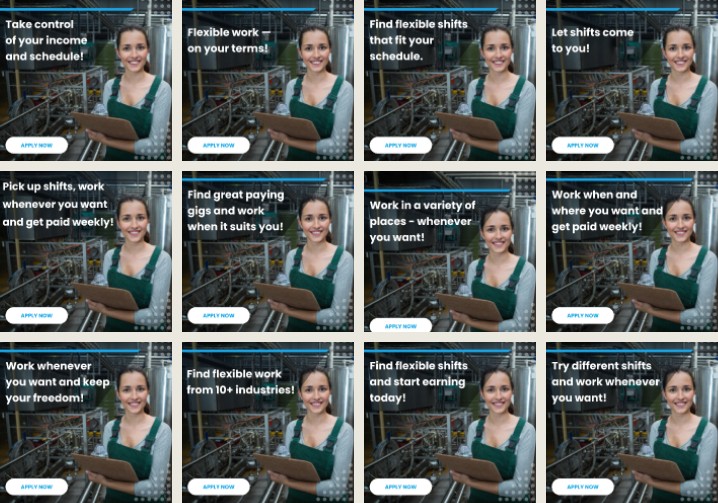
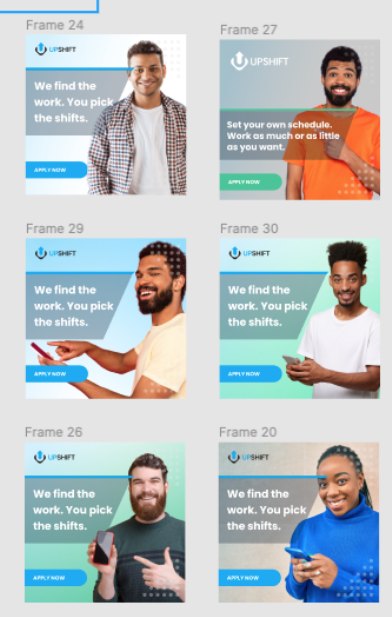
Some of the headlines tested on Facebook. The winner, "Pick up shifts, work when you want, get paid daily", became Upshift's main line.
Attractive job ads and landing pages that sell the position.
If five employers are hiring for the same position, why would a candidate choose yours? Most job pages list requirements and show a long form. We instead make the opportunity attractive, credible and easy to understand before asking candidates to apply.
The usual job page
Requirements first, then a long form.
GENERIC EXAMPLE · NOT A REAL COMPANY'S PAGEWarehouse Associate
Requirements- High school diploma or GED
- Able to lift 50 lbs
- Must pass background check and drug screen
- Reliable transportation
- Available for weekends and overtime
An Upshift page
What the candidate gets, not what is required.
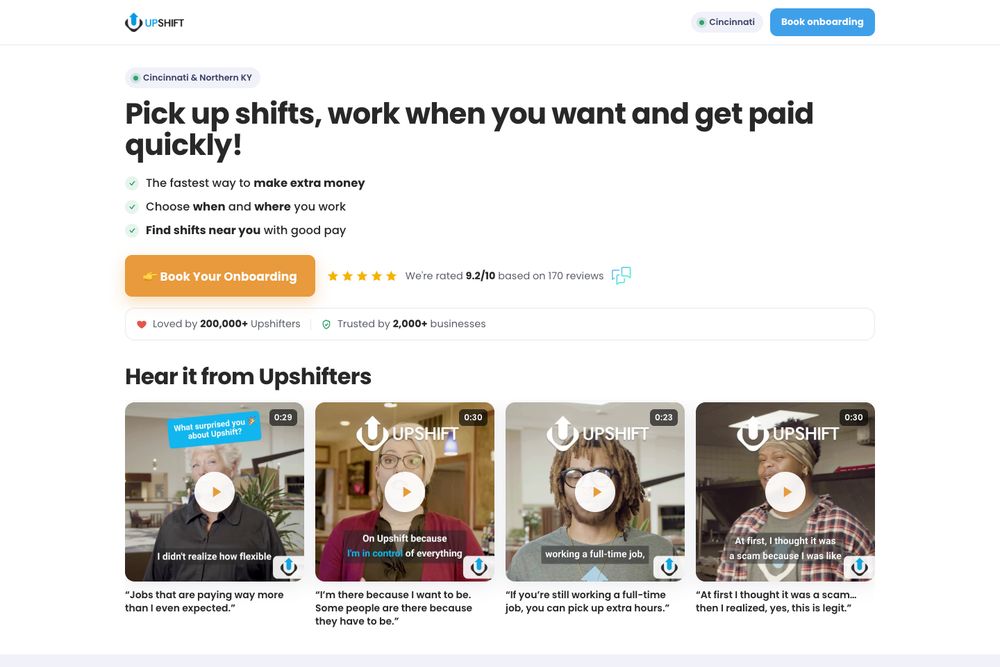
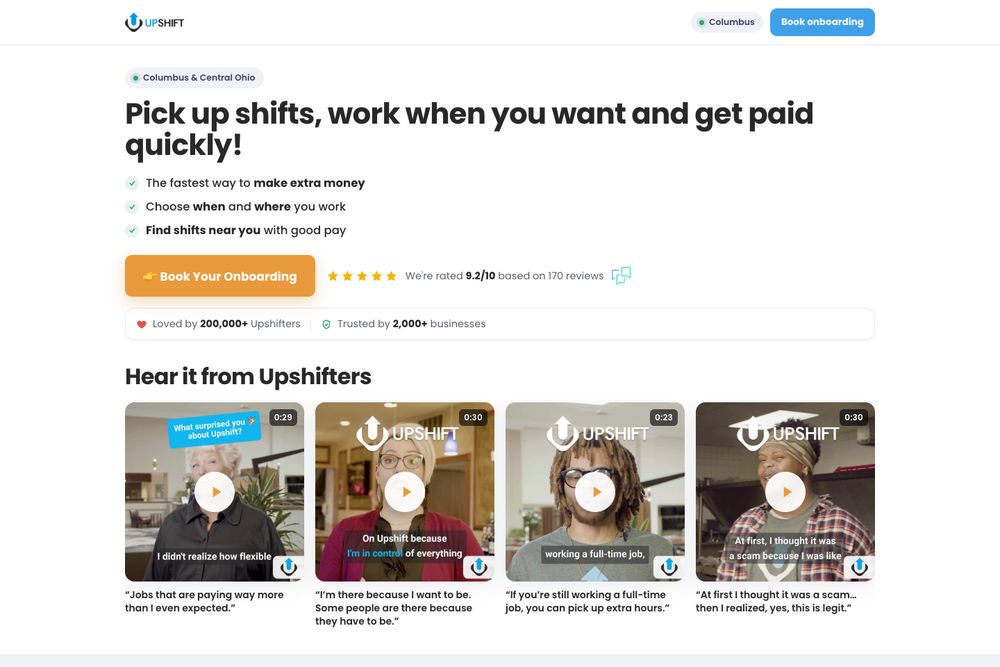
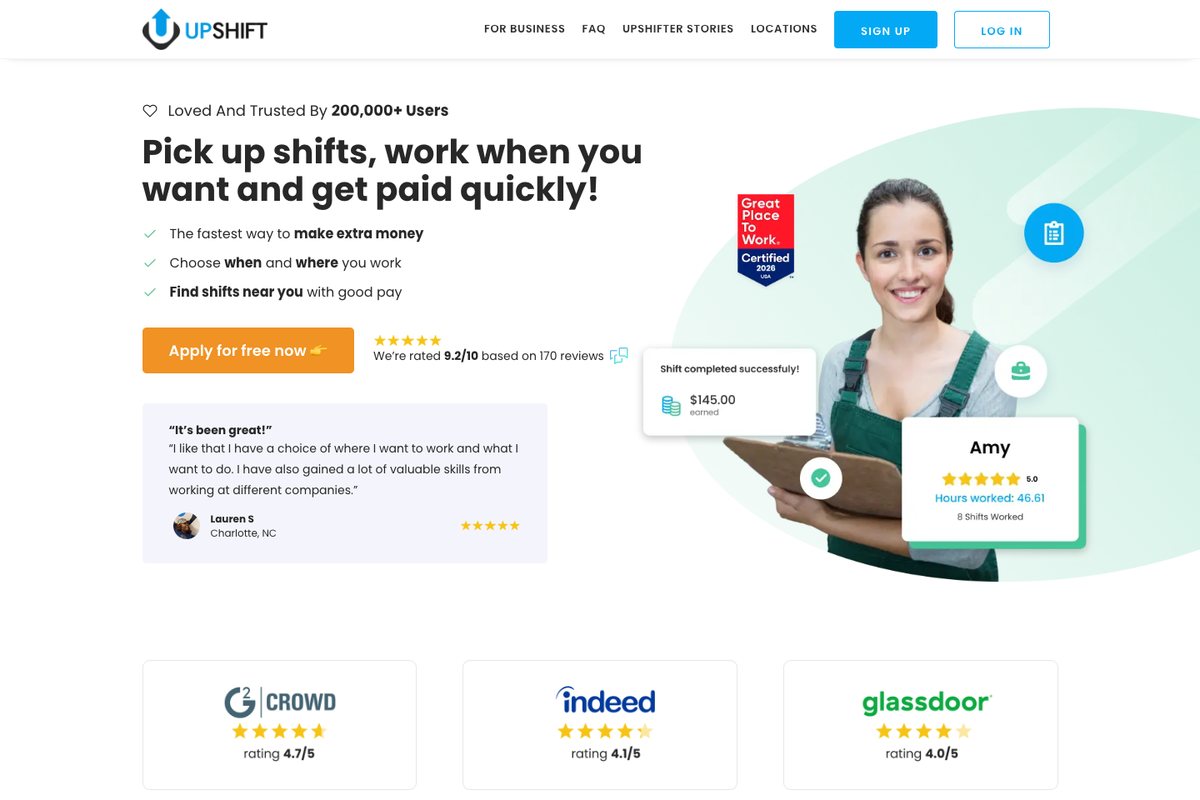
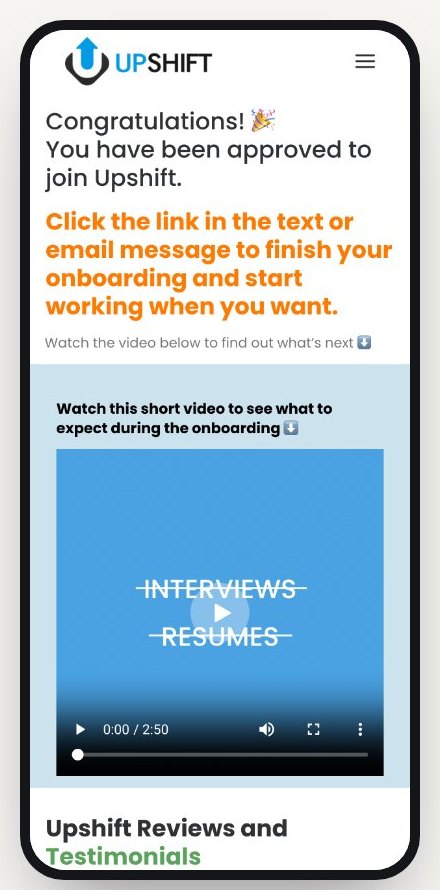
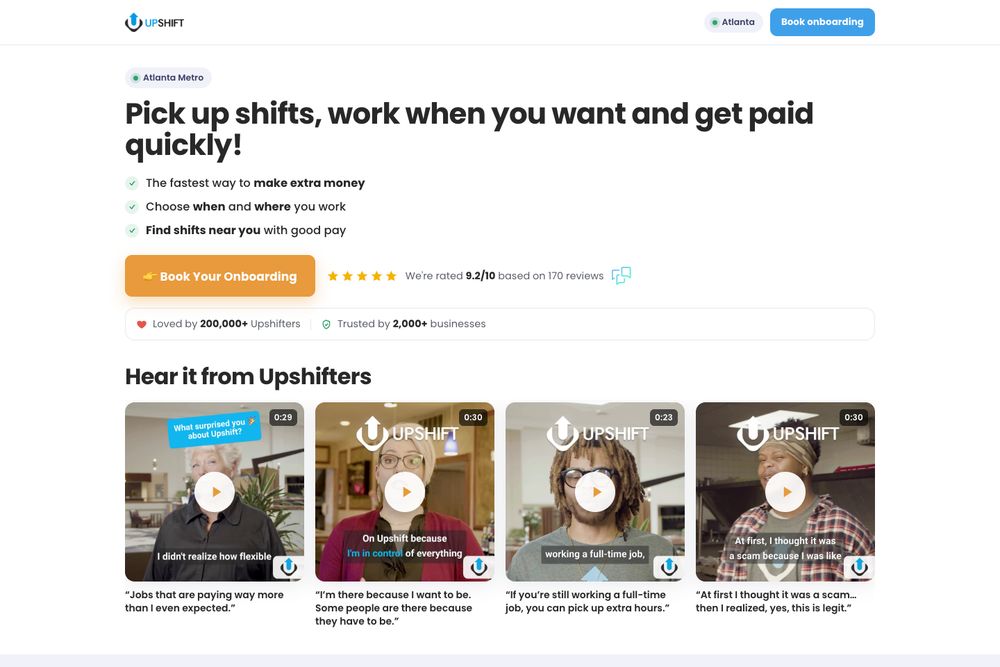
Live pages, screenshots October 2026. upshift.work/for-people on top, with two of the 36 city pages behind it.
Candidates check your reviews before they apply
I create and manage the employer branding: how the company looks and sounds in every ad, page and message. I also run employer review campaigns that invite workers to share their experience, so ratings stay consistently high on Indeed and ZipRecruiter.
Video testimonials on landing pages and in ads
Upshift filmed its own workers on location in 2022. Each 20 to 30 second video answers one doubt, such as "Is this a scam?". Every video was cut square for the Facebook feed, vertical for Stories and Reels, and wide for the landing pages.
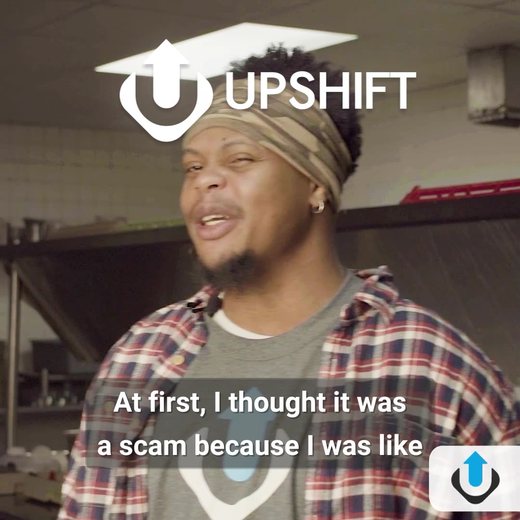
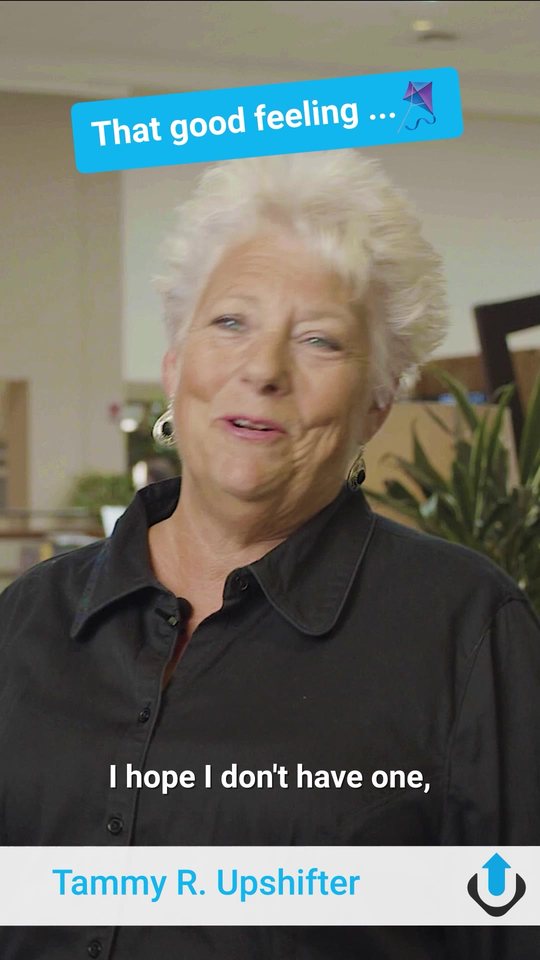
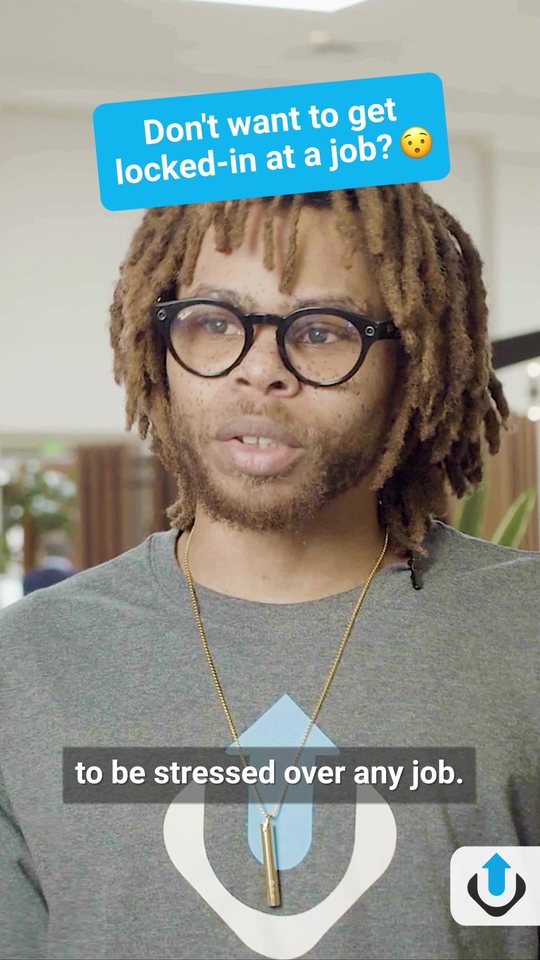
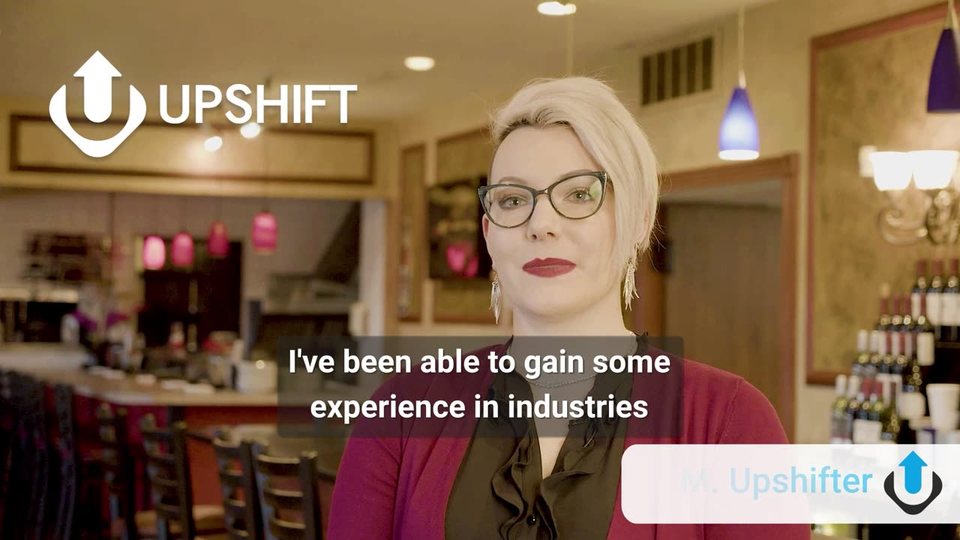
A/B test, 2023: a short worker video on the sign-up confirmation page brought 13% more new sign-ups to onboarding.In the same test, the cost per new worker fell by 20%.
Long forms scare people away
Someone looking for a job does not want to fill out a form for the 50th time. I've built, tested and redesigned interactive application forms that ask the right questions one at a time, with big buttons instead of typing and even a short video answer. I measure where candidates drop off and improve those steps.
One long page of required fields, a resume upload and a password, before the candidate knows anything about the job.
Where do you want to work?
Tap to answer · 1 of 4
What kind of work do you want?
Tap to answer · 2 of 4
You're doing great!
Two questions left. It takes less than a minute.
Tell us about your last job in 20 seconds.
No resume needed. A short video is enough.
3 of 4
You're in!
Pick a time for your onboarding.
4 of 4 · done
One question at a time, big buttons instead of typing, a short video instead of a resume, and a "you're doing great" screen with proof from other workers.
Both forms are examples written for this page. The social proof on the right comes from upshift.work/for-people.
The old personality assessment in the application had a major friction point. I worked with our product and engineering team to redesign the flow, and conversions improved by more than 25%.Upshift application flow.
Nobody falls through the cracks
I run automated campaigns so people stay engaged through the whole funnel, from sign-up to the first day at work. They run from the ATS (applicant tracking system) and other marketing software, which I set up with our product and engineering team, and they qualify or disqualify candidates along the way.
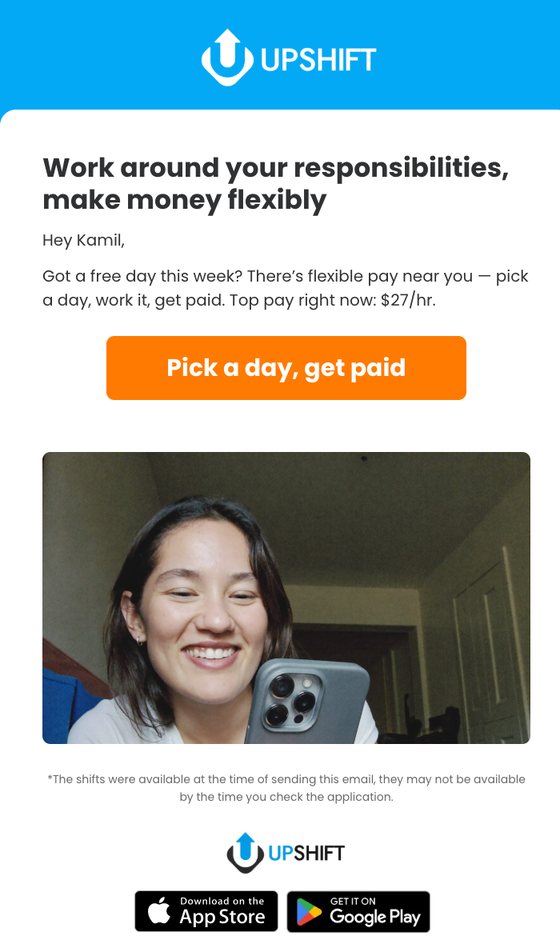
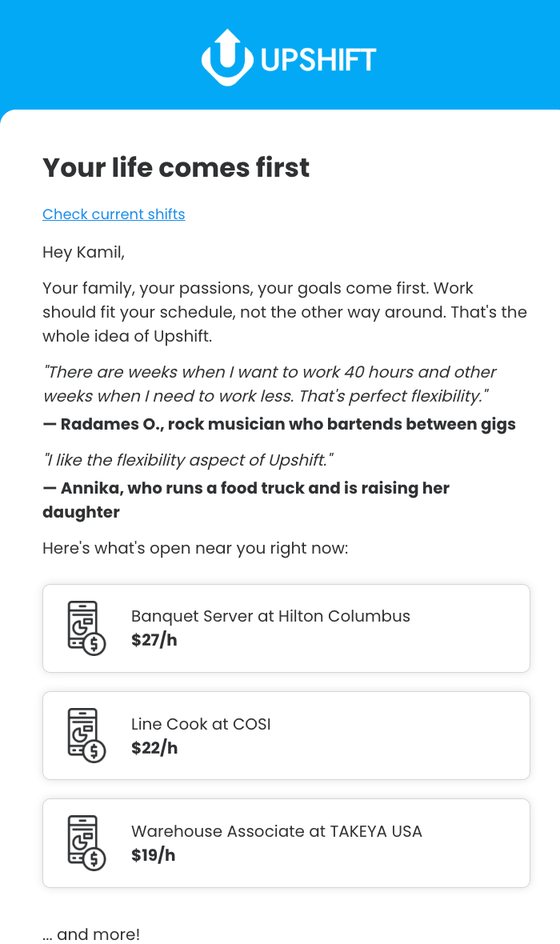
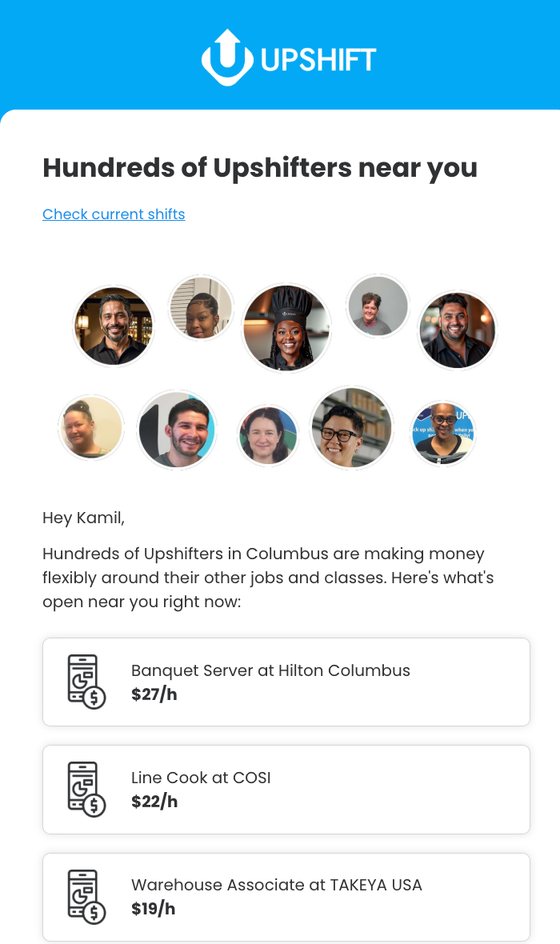
Emails: live weekly emails to past workers, sent with Customer.io since August 2026. The greeting shows "Kamil" because these are test sends to his own profile. Texts: the Cincinnati new sign-up series, written October 2026 and not sent yet. "Jasmine" is a sample name.
I run re-engagement campaigns for stalled applicants all the time, by text and email, from the ATS and other marketing software. This lowered the cost per candidate dramatically, because we stopped relying only on ads and started using our own lists of past candidates.One earlier text series brought back 2.5 times as many stalled applicants as a control group that got no texts.
Every advertising dollar can be connected to a hiring outcome.
I run source-to-first-shift reporting: every source is followed from the ad to the application, the onboarding and the first shift, and the dashboards show it in one place. The point is not the dashboards. It is that the data changes where the recruiting budget goes. Below is the view I use most: which locations are short of workers, and where recruiting has to increase. The panels are simplified versions of Upshift's Q4 dashboard, with the real numbers removed.
| Market | Status | Open shifts, next 14 days | People short | Remote sites |
|---|---|---|---|---|
| Cincinnati | Recruit | 2 sites | ||
| Columbus | Recruit | 1 site | ||
| Cleveland | Watch | None | ||
| Atlanta | Confirm | None |
Recruit: not enough applicants for the open shifts. Watch: close to the limit. Confirm: enough applicants, so confirm the ones waiting.
Supporting detail
People who worked a shift in the last 30 days, against a seasonal target. The gap tells recruiting how hard to push this week.
New workers onboarded each week, against the weekly target.
Programmatic job boards compared with Indeed on the same numbers: cost per qualified applicant.
The same platform can be the cheapest source in one city and the most expensive in another, so budget moves city by city.
| Platform | Columbus | Cincinnati | Cleveland | Atlanta | Charlotte |
|---|---|---|---|---|---|
| Programmatic board A | Low | Low | Medium | Low | Medium |
| Programmatic board B | Medium | High | High | Medium | Not live |
| Appcast | Medium | Low | Medium | High | Medium |
| Indeed | High | Medium | Low | Medium | High |
| Meta (Facebook, Instagram) | Low | Medium | Medium | Low | Low |
Share of people who reach each stage, from the first ad view to the first shift. The widest drop shows where to work next.
Each platform is followed past the sign-up form: passed the assessment, onboarded, worked a shift. Spend comes from the platforms' own dashboards.
| Platform | Sign-ups | Passed assessment | Onboarded | Worked a shift | Cost per worker |
|---|---|---|---|---|---|
| Programmatic board A | Lowest | ||||
| Programmatic board B | High | ||||
| Appcast | Medium | ||||
| Indeed | Medium |
The biggest loss is between passing the assessment and getting a worker account, not at the job ad. That is where the next test goes.
Programmatic job boards compared with Indeed on the same numbers: cost per qualified applicant.
| Campaign | Channel | Status | Workers vs holdout |
|---|---|---|---|
| Weekly open shifts email | Running | ▲ More workers | |
| Stalled applicant texts | Text | Running | ▲ More workers |
| Never logged in texts | Text | Running | ● More logins, same workers |
| Shift reminder pushes | Push | Review | ● No clear lift |
Each campaign keeps a holdout group, a similar group that gets nothing, so the dashboard shows what the campaign added.
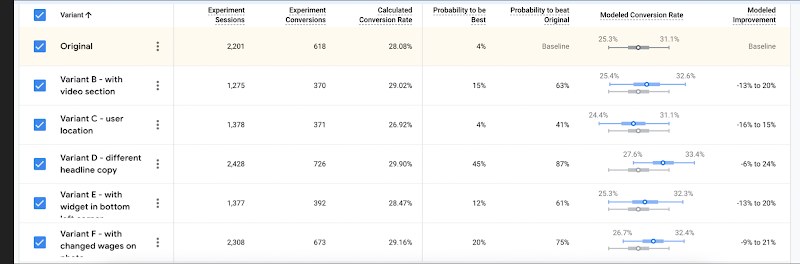
Three rounds, 11 versions in total. Most versions lost. Two won and became the new page.
Work with me
Building a better recruitment acquisition function?
I bring hands-on experience in recruitment advertising, application conversion, candidate engagement and analytics to multi-location US employers. I'm available for embedded contract and fractional engagements, working US Eastern hours.
Tell me which roles or locations are hardest to fill, and I'll share the first things I'd investigate.
kamil@8020boost.com+1 (513) 306-7388 · US number, call or text